A video opens slightly blurry, then sharpens a few seconds later. On a train, it gets softer again but keeps playing. That change is often deliberate: the player is adjusting how much data it asks for. HLS is one of the delivery systems that makes this possible.
HLS delivers the stream; M3U8 describes it
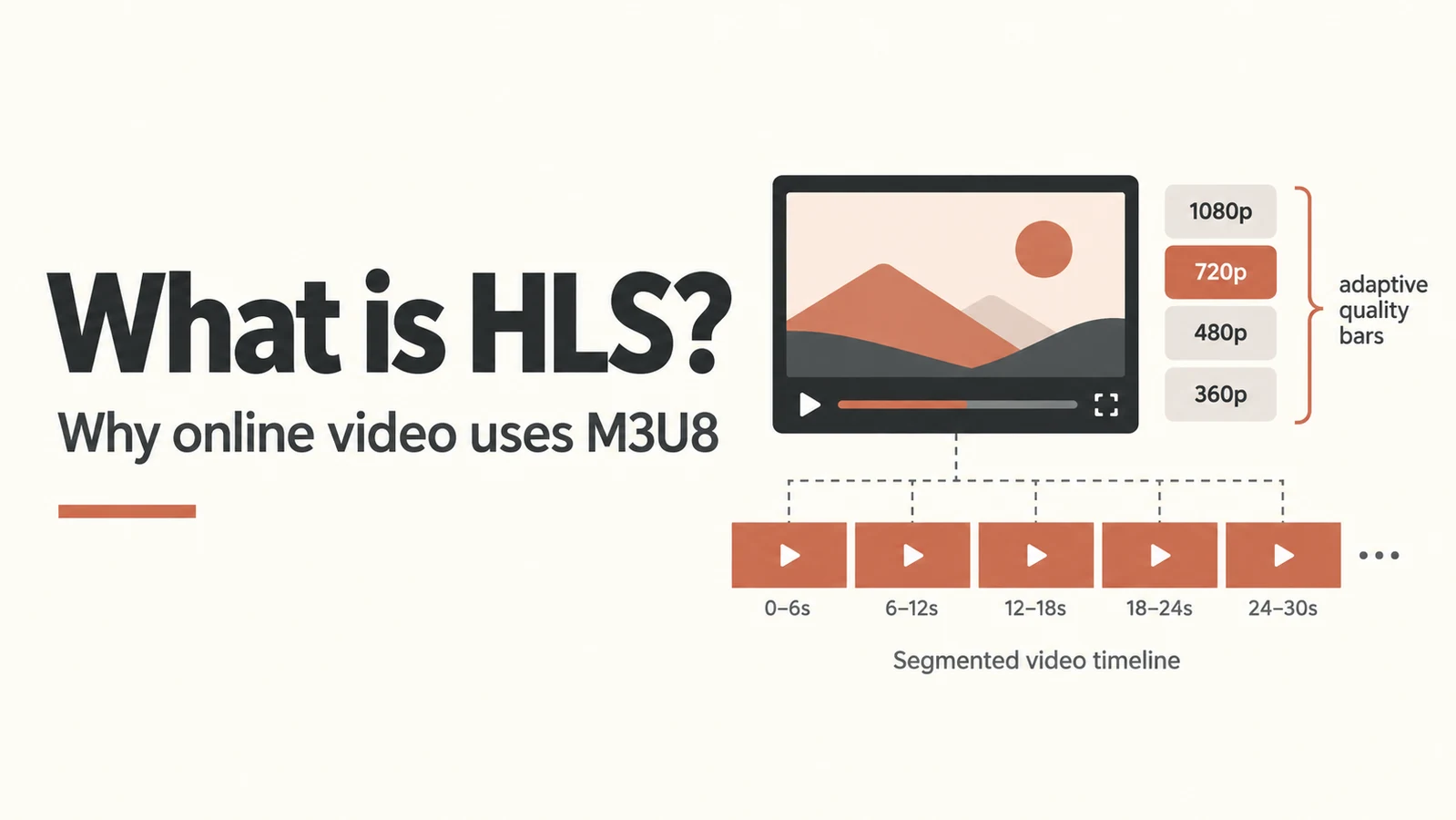
HLS stands for HTTP Live Streaming. Developed by Apple, it supports both live broadcasts and recorded video. Media is commonly delivered in small segments through ordinary HTTP requests. The player fetches more data while it plays what it already has.
An M3U8 file is a UTF-8 text playlist used by HLS. It describes available streams or points to media segments; it does not contain the picture and sound itself. Segments can use MPEG-TS or fragmented MP4, so HLS does not always mean a collection of .ts files.
Technical reference: Apple’s HLS overview
What happens after you press play?
Imagine an interview available in 360p, 720p and 1080p. A player may first read a multivariant playlist to discover those options. It then opens the media playlist for one version and starts requesting segments. A stream with only one version may not need that initial choice.
As playback continues, the player watches download speed and its buffer. If data arrives too slowly, it can request a lower-bitrate version for upcoming segments. When conditions improve, it can move back up. The exact switching behavior depends on the player and how the streams were prepared.
This explains a useful everyday fix: if playback keeps stopping at the highest quality setting, try Auto or a lower resolution. Refreshing repeatedly may only make the player rebuild its buffer.
Why use it for live video?
A live program has no finished file to download yet. The service keeps producing segments and updating its playlists while the event continues. Delivery can use conventional web servers and CDNs, which helps distribute a stream to many viewers.
Buffering provides some protection against uneven connections, but it also contributes to the delay between the event and your screen. Low-Latency HLS can reduce that delay; it does not guarantee an instant view of the event on every service.
Why a saved playlist is not an offline video
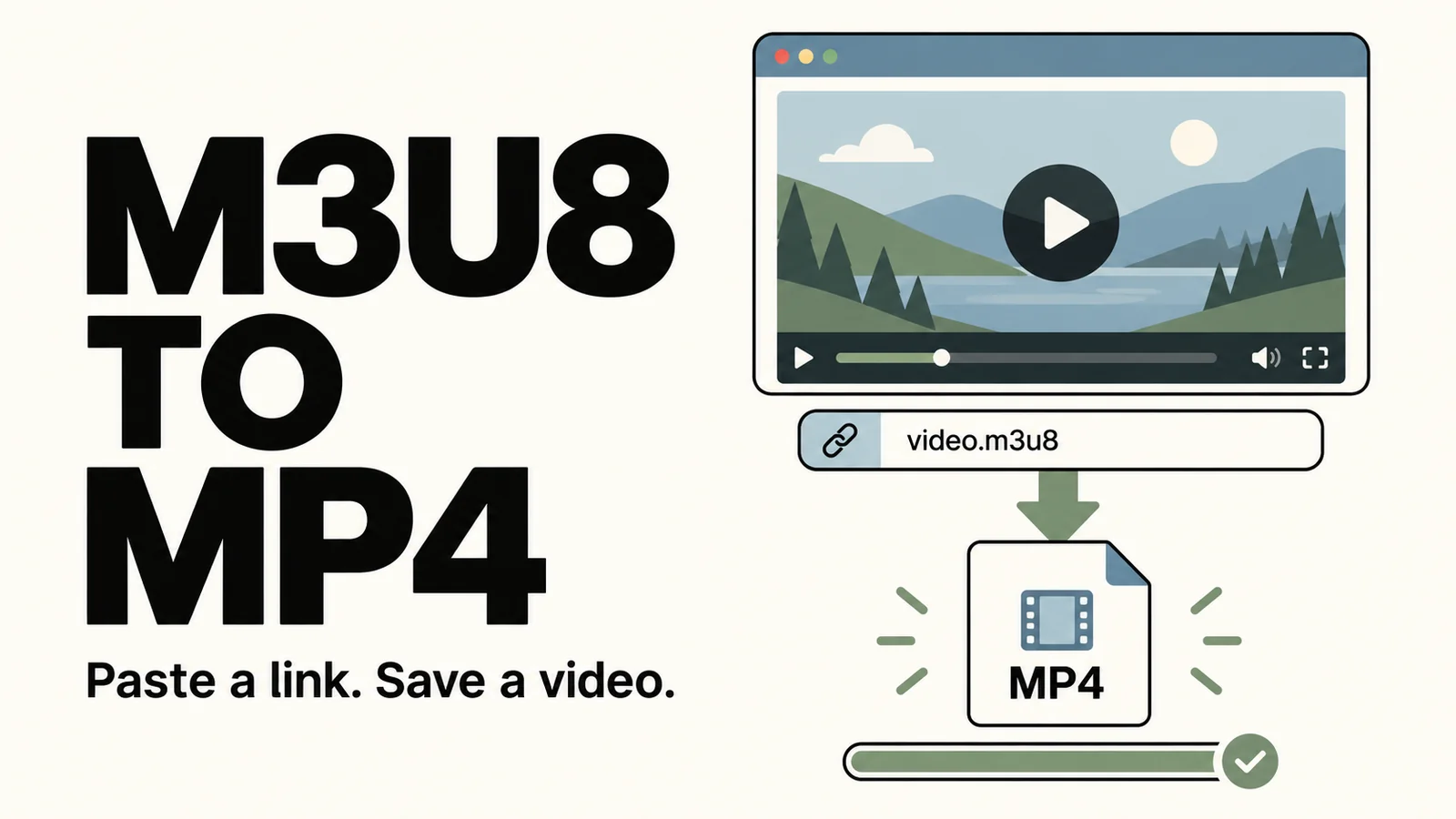
Saving an M3U8 usually saves the directions, not the media. Offline playback also needs the referenced segments and, depending on the stream, initialization data, a separate audio track and the relevant access authorization. A live playlist may describe only a recent window of the broadcast.
Renaming that playlist to .mp4 does not collect those missing pieces. If the service offers a download or offline option, start there. For content you can save with an HLS-capable tool, check the resulting file’s duration and audio before relying on it.
Playlist and segment details: RFC 8216
HLS describes delivery, not a fixed level of quality. Source material, encoding and bitrate still determine how good the result looks. Two HLS streams can look very different even when both play smoothly.
Related reading: What Is M3U8? How Is It Different from MP4?
Comments 0
Comments are disabled for this article.
Loading comments…